
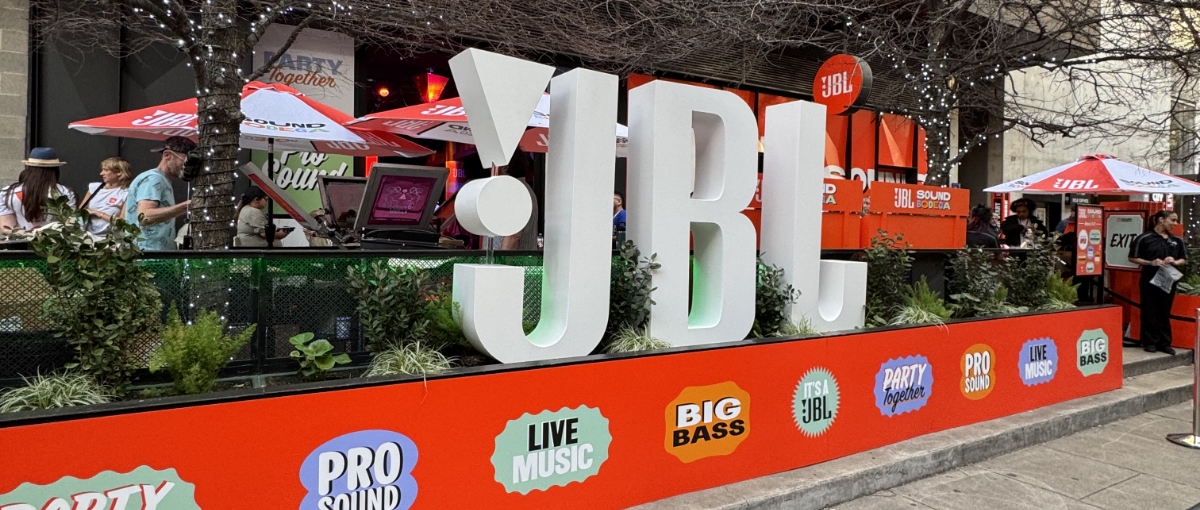
Fewer than eight percent of South-by-Southwest brand installations are recalled two weeks after the March festival, despite 270,000 badge holders flooding Austin’s downtown corridors. Veteran designers blame the amnesia on a single missing line in the brief: the sentence that spells out why the brand showed up in the first place.
Why a One-Sentence Objective Beats a Mood Board
Teams that leap straight into color palettes and merchandise orders routinely burn six-figure budgets on “spray-and-pray” footprints that look busy in Instagram stories yet contribute zero pipeline value. Experiential strategists now insist on a north-star goal drafted before a single dollar is spent—something as precise as “collect 1,500 opt-in emails from seed-stage SaaS founders who list ‘fundraising this year’ on their profile.” That sentence becomes a filter for every downstream decision, from wrist-band Pantone shade to the data-capture flow that determines whether a scanner hands over a tote bag. Without the filter, activations chase vanity metrics: crowded photos that never convert into attributable revenue and anecdotal “buzz” that finance teams refuse to finance again. Agencies that impose the one-sentence rule report a 22 % lift in post-event qualified leads compared with peers who define success as “good vibes,” according to Forty4 Design’s 2025 benchmark study. In short, clarity written early beats glamour that fizzles before the flight home.
Six Metrics That Replace Footfall Fairy Tales
Foot traffic remains the gateway metric—65 % of attendees make at least one unplanned stop inside a branded space—but planners now layer secondary KPIs that survive the flight home. Emotional connection is quantified by dwell: festival data show that keeping a guest beyond four minutes lifts later purchase intent 32 %. Participatory depth is tracked through workshop sign-ups; hands-on sessions generate three times the user-generated content of passive showcases, and each post tags the brand handle 1.8 times on average. Cost per qualified lead on Sixth Street averages $4.80 during festival week versus $18.40 for the same titles on LinkedIn, making on-site CRM tagging an easy CFO sell. Social lift still matters, but only when campaign hashtags are unique enough to scrape without noise; #SXSW alone carries 1.4 million annual posts, whereas #ToastMyCode (the laser-avocado activation) produced 42,000 traceable mentions with 88 % positive sentiment. Finally, planners add a “location efficiency ratio”: target-badge scans divided by total footsteps, a figure that exposes the difference between a mob and the right mob.
Post-Event KPI Packets That Finance Teams Accept
By 9 a.m. on the Monday after the festival, experiential agencies deliver a “morning-after packet” that blends real-time dashboards with lagging indicators. Live data include unique RFID or QR check-ins, median dwell, decibel peaks, and hourly throughput. Lagging data arrive once the dust settles: email opt-ins that pass a validity check, hashtag mentions inside a 24-hour attribution window, and cost per workshop seat. Two weeks later, teams text the same panel a two-question brand-recall survey; anything above 15 % unaided recall is considered strong in the cluttered South-by calendar. CRM tagging then allows firms to track “activation-attributed pipeline” and, six months out, count closed-won deals. One enterprise SaaS client told Event Marketer that $180,000 spent on a Rainey Street lounge in 2024 yielded $1.3 million in contracted revenue traced through Salesforce campaign codes—proof that the booth was more than a line item. Finance teams accept packets only when every figure is traceable; anecdotes wrapped in adjectives get kicked back for rework.
How Austin’s Micro-Zones Make or Break Traffic
Austin fractures into behavioral micro-zones during the festival, and picking the wrong cluster can crater qualified traffic. The Convention Center corridor courts tech founders and enterprise buyers who hold Platinum or Interactive badges; Rainey Street pulls late-night creatives who bounce between bands; East Side parks attract Gen-Z music fans with single-day wristbands. A VR art gallery that leased Red River frontage in 2024 logged 9,000 footsteps yet only 212 target-badge scans because 70 % of passers-by held music-only credentials. Conversely, a fintech popup placed within 50 yards of a branded hotel shuttle stop recorded an 18 % uplift in qualified scans, city sensors show. Planners now overlay SXSW’s publicly available badge-type heat maps with cellular mobility data licensed from carriers, then bid on micro-lots as small as 400 sq ft to match density with demographic precision. The practice has shaved an average of $12,000 off unused square footage while raising scanner conversion above 30 %. In short, the map you pick in September decides the ROI you defend in April.
Concepts That Surface Product Truth, Not Just Spectacle
SXSW awards no prize for “biggest build”; city fire code actually penalizes structures over 30 ft without a certified engineer on call. The most-photographed brand moment of 2025 was a 20-foot avocado-toast bar where guests laser-etched their LinkedIn URL onto sourdough slices. The restaurant-tech startup behind the stunt booked 62 demo calls on-site because the toast line doubled as a live demo of its tabletop laser marker, price point $3,200. Designers now run a three-step litmus: does the concept surface a core product feature, does it force an attendee choice that stores memory, and would the experience feel odd if the logo vanished? Three consecutive yeses mean the idea is on-brand; any no sends the team back to sketch mode. The discipline has cut build budgets 14 % year-over-year while raising product-mention recall to 27 %, per the 2025 SXSW Post-Event Brand Survey. Critics argue the festival is still noisy, yet brands that anchor stunts to product truth stand out amid the circus.
Austin Permits Begin in September, Not March
The City of Austin’s ACE (Austin Center for Events) portal opens South-by applications every September, and final submissions close 30 days before the festival, yet fire-lane approvals can take up to 45 days. Organizers must upload scaled site plans showing ADA routes, tent square footage, generator placement, and decibel readings at property lines. Miss a 10-foot setback for gas cans or a grease-trap inspection for an espresso cart and the city can shut you down on arrival morning. Hiring a local fixer who has attended ACE meetings since 2018 typically saves brands $8,000-$12,000 in rush fines, the city’s Special Events office reports. Another hidden trap is the 10 p.m. cut-off for amplified music in most downtown lots; last year a headphone-disco sponsor thought a silent rave sidestepped the rule, only to learn that sub-bass levels above 65 dB still trigger penalties. Start the paperwork six months out, and budget an extra 15 % for municipal curveballs—cheaper than the $25,000 on-site citation issued to one crypto exchange for an unpermitted LED wall. Unexpectedly, the biggest line item risk is not creativity; it is calendar complacency.
Action Steps for Brands Planning 2027
- Write the one-sentence goal by Labor Day; circulate it to every vendor so creative, staffing, and data teams share the same filter.
- License badge-type heat maps from SXSW’s data partner and overlay carrier mobility files to select a micro-lot before October lease rates spike.
- Book a local fixer who has presented at ACE meetings; ask for a checklist of the five most-cited violations from the previous year.
- Build a KPI packet template now—columns for RFID scans, dwell, opt-ins, and pipeline—so developers can wire real-time dashboards before the holiday break.
- Schedule the two-question recall survey the Monday after the festival; reserve SMS credits and draft IRB language so the panel blast takes minutes, not days.
Sources: Forty4 Design 2025 benchmark study; Event Marketer; 2025 SXSW Post-Event Brand Survey; City of Austin Special Events office.
Comments